

Trauma can disrupt the brain, MeRT® is designed to help restore healthier brain activity
Trauma can change the way the brain processes stress, emotion and daily experiences. MeRT uses brainwave analysis and personalized neuromodulation to help identify and change patterns of dysregulation that may be contributing to PTSD symptoms.
PTSD is not a sign of weakness or a failure to move on. Following trauma, the brain may change in ways that are intended to protect you. For some people, however, those brain changes remain active long after they are needed.
As a result, the brain can continue responding as though danger is present—even when you know you are safe. This may contribute to ongoing patterns of hypersensitivity, emotional reactivity, disrupted sleep, and difficulty feeling fully present.
No two people experience PTSD in exactly the same way, and no two brains show the same patterns of activity.
A brainwave scan measures your brain's unique electrical activity and helps identify patterns that may reflect dysregulation. This objective information provides a more individualized understanding of how your brain may be functioning.
Using insights from your brainwave scan, MeRT personalizes treatment to your unique patterns of brain activity.
Through gentle, non-invasive magnetic stimulation, MeRT is designed to support healthier brain function. The goal is not simply to address symptoms, but to treat the underlying brain activity that may be contributing to them.
Meaningful improvement, backed by clinical evidence. Results from our clinical trial
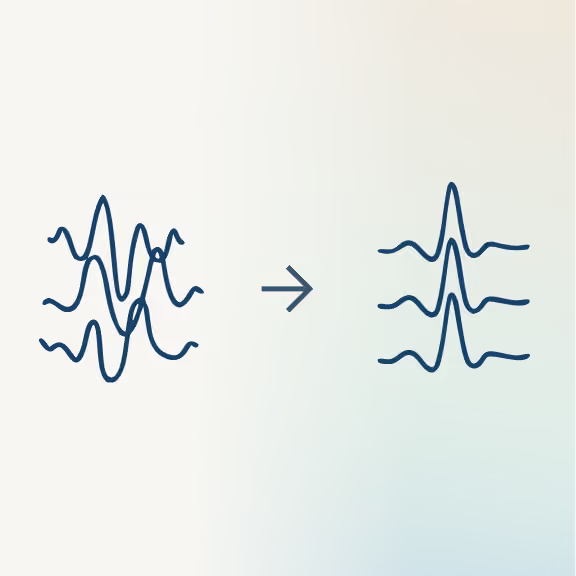
More normalized brain activity

Clinically meaningful improvements
68%Remission rate
52%Reduction in PTSD symptom severity
Lasting Results
Frequently asked questions
Post-traumatic stress disorder is a mental health condition that can develop after experiencing or witnessing trauma. It is a real medical condition, and effective treatment options are available.
PTSD can affect people in different ways. Symptoms may include nightmares, unwanted memories, avoidance, emotional numbness, irritability, difficulty concentrating, sleep disruption, or feeling constantly on alert.
A qualified healthcare professional diagnoses PTSD by reviewing your symptoms, experiences, health history, and established clinical criteria. You do not have to navigate the process alone.
A qualified healthcare provider will determine eligibility after reviewing your diagnosis, symptoms, medical history, medications, and possible risk factors.
No. PTSD can affect anyone who has experienced trauma. MeRT treatment is not limited to veterans, active-duty service members, or first responders.
MeRT is an FDA-cleared treatment for adults with PTSD, but it should not be described as a cure. Individual results vary, and not everyone responds in the same way.
In many cases, yes. MeRT may be used alongside psychotherapy, medication, or other forms of care. Your healthcare providers can help coordinate the right approach for you.
Some patients consider MeRT after trying other treatments. A provider can review your history and help determine whether it may be an appropriate next option.
Possibly. Your provider will review your medications and let you know whether any precautions or adjustments need to be considered.
Your provider will review your progress and discuss the next steps with you. These may include continued monitoring, therapy, medication management, or additional treatment based on your needs.
Myth vs fact
PTSD is often misunderstood. See how much you know.
Global research shows PTSD affects a substantial portion of the population. The World Health Organization estimates approximately 3.9% lifetime prevalence worldwide, with many individuals experiencing persistent symptoms.[6]
PTSD can result from many forms of trauma—including accidents, violence, disasters, and medical events—and affects people across all backgrounds, not only military populations. [1, 6, 7]
PTSD involves neurobiological changes in fear, stress, and regulation circuits in the brain—not just feelings. Research describes altered neural circuitry and stress-system dysregulation associated with PTSD. [1, 2]
PTSD is not a sign of weakness. It is a neurobiological response to overwhelming stress, and anyone can develop PTSD following trauma. [1, 2, 7]
PTSD symptoms may appear immediately or emerge weeks or months later. Delayed onset is well documented and reflects differences in how individuals process and regulate stress. [1, 6]
Evidence-based psychotherapies help many people, but real-world studies show meaningful rates of nonresponse and dropout, meaning many individuals do not achieve full symptom relief from therapy alone. [3, 4]
Medications can reduce symptoms for some patients, but no medication is known to directly normalize underlying PTSD-related brain circuitry, and many individuals continue to experience symptoms despite pharmacotherapy. [3, 5]
Many people improve over time. PTSD reflects learned patterns of brain regulation, and tailored care can reduce symptoms and improve functioning, even when recovery is gradual. [3, 7]
[1] National Institute of Mental Health. (n.d.). Post-traumatic stress disorder (PTSD). U.S. Department of Health and Human Services.
https://www.nimh.nih.gov/health/topics/post-traumatic-stress-disorder-ptsd
[2] Rauch, S. L., Shin, L. M., & Phelps, E. A. (2006). Neurocircuitry models of posttraumatic stress disorder and extinction. Biological Psychiatry, 60(4), 376–382.
https://doi.org/10.1016/j.biopsych.2006.06.004
[3] Ross, A., & Darnall, C. J. (2021). A review of PTSD and current treatment strategies. Military Medicine, 186(Suppl 1), 330–341.
https://pmc.ncbi.nlm.nih.gov/articles/PMC8672952/
[4] Imel, Z. E., Laska, K., Jakupcak, M., & Simpson, T. L. (2013). Meta-analysis of dropout in treatments for PTSD. Journal of Consulting and Clinical Psychology, 81(3), 394–404.
https://doi.org/10.1037/a0031474
[5] Hoskins, M., Pearce, J., Bethell, A., et al. (2015). Pharmacotherapy for post-traumatic stress disorder: Systematic review and meta-analysis. British Journal of Psychiatry, 206(2), 93–100.
https://doi.org/10.1192/bjp.bp.114.148551
[6] World Health Organization. (2024). Post-traumatic stress disorder (PTSD).
https://www.who.int/news-room/fact-sheets/detail/post-traumatic-stress-disorder
[7] U.S. Department of Veterans Affairs, National Center for PTSD. (n.d.). Understanding PTSD.
https://www.ptsd.va.gov/understand